Skip to content

R&D and engineering · Clean energy · Cooling

TOVENVOR

Bladeless viscous-drag turbines for cooling and energy recovery.

INIJEVID extracts shaft work from airflow through stacked, screw-fitted discs, designed, 3D-printed and lab-characterised by Enigmasoft across 40, 60 and 80 mm scales.

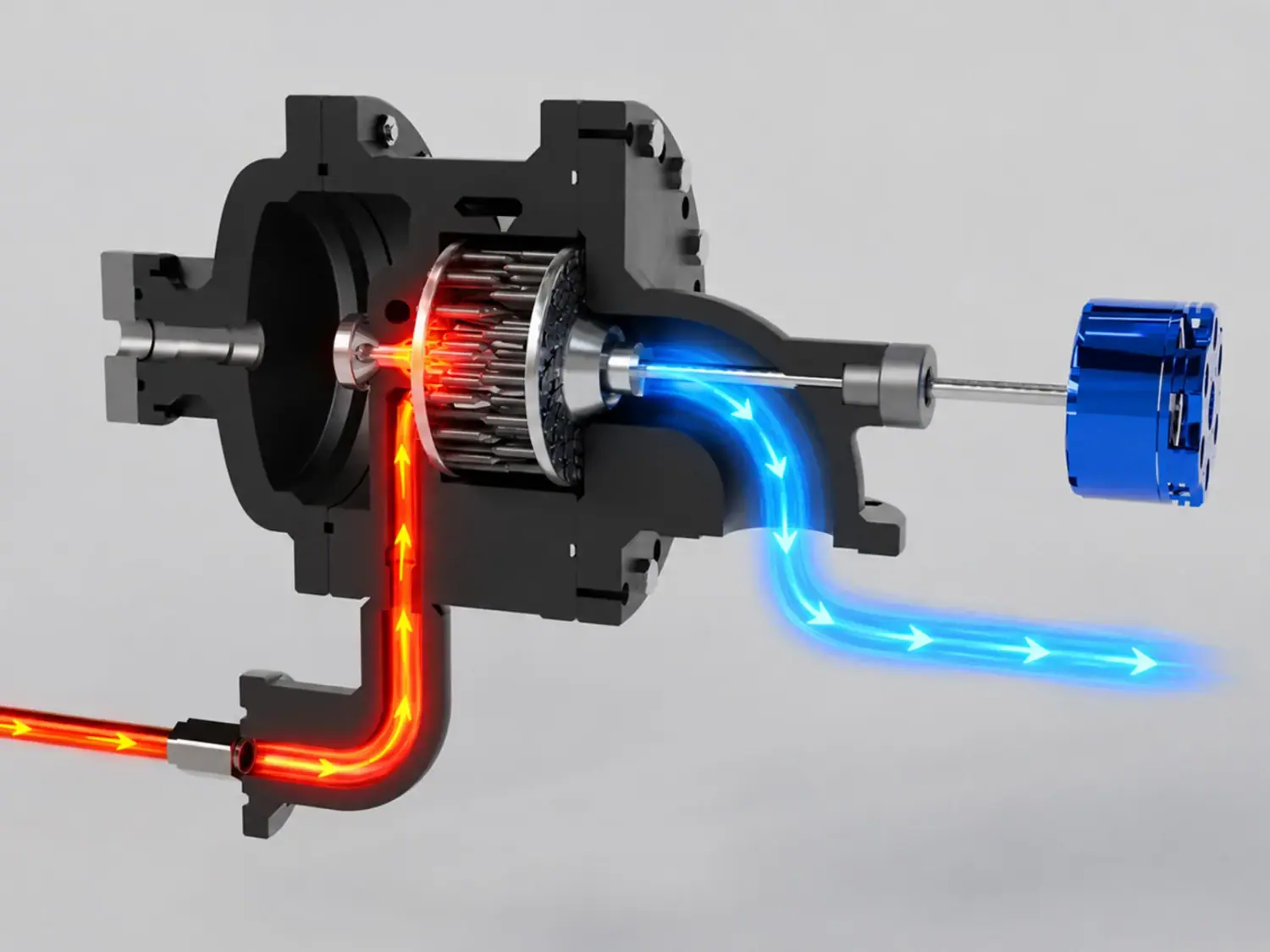
Cutaway render of the INIJEVID turbine showing warm air entering and cooled air leaving the disc stack
Client
Unitech Synergies Limited, UK
Service name
Clean energy · Cooling & HVAC · Energy recovery
Systems
INIJEVID bladeless turbine · TOVENVOR Tabers concept
Our role
Design, prototyping, instrumentation and lab characterisation

Overview

A bladeless turbine, driven by viscous drag.

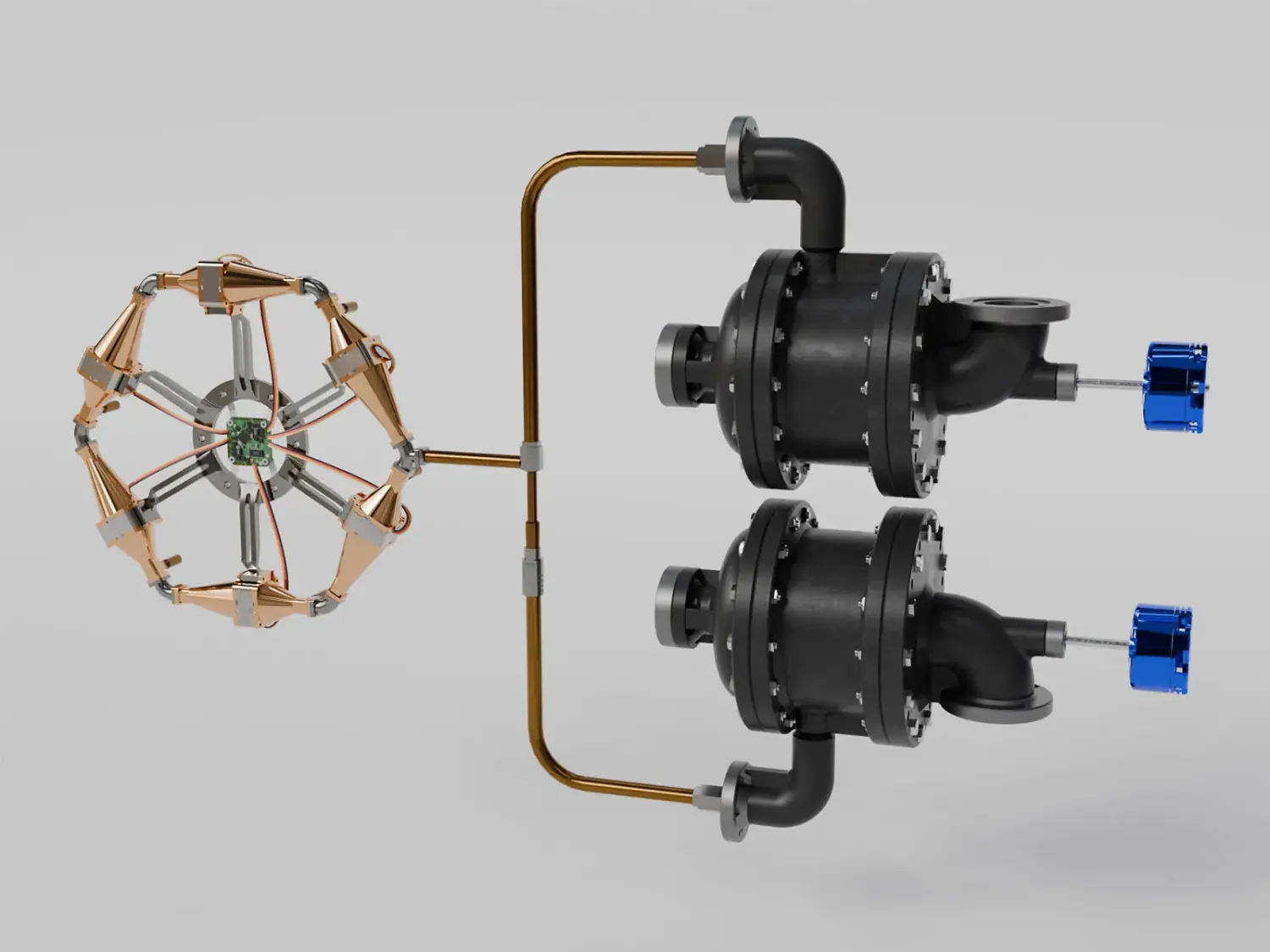
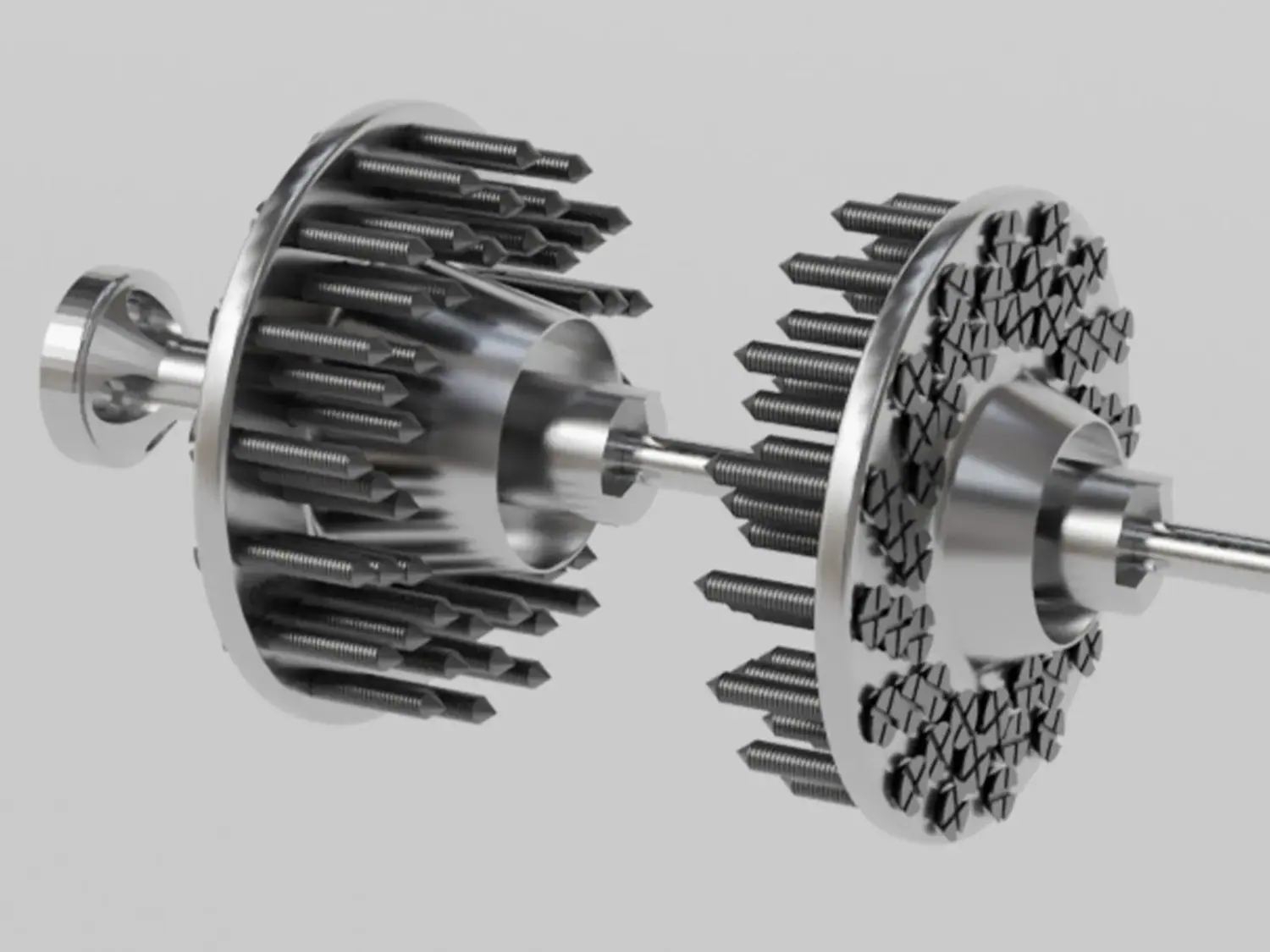
TOVENVOR Tabers is a cooling and energy-recovery concept from Unitech Synergies, pairing vortex-tube thermal separation with INIJEVID, a bladeless turbine in which stacked, screw-fitted discs extract shaft work from airflow through viscous drag and fluid momentum transfer.

Enigmasoft translated the concept into experimental hardware: design, rapid prototyping, instrumentation and laboratory characterisation of INIJEVID prototypes at 40, 60 and 80 mm scales.

Key results

12

parametric test configurations on the 40 mm axial prototype

Laboratory

3

prototype scales built and characterised: 40, 60 and 80 mm

Laboratory

2.7 bar

first shaft power recorded from a two-disc configuration

Lab, initial result

The challenge

New cooling cycles need new turbomachinery, characterised from first principles.

  • Compressor-heavy energy use
  • Refrigerant phase-down
  • Unproven turbomachinery
  • Needs first-principles data

Vapour-compression cooling relies on energy-intensive compressors and on refrigerants subject to an international phase-down. Alternative cooling cycles call for new classes of turbomachinery, whose performance must be characterised from first principles.

The objective was to establish a rigorous experimental basis for INIJEVID: iterating geometries rapidly and building instrumented rigs that resolve rotational speed, shaft torque, airflow and temperature, so the influence of every design parameter could be quantified.

Our solution

From CAD model to instrumented test rig.

01

Engineering & prototype design

  • Parametric 3D CAD modelling of axial, tangential and cross-flow configurations at 40, 60 and 80 mm scales
  • Disc-stack geometry studies — tapered-diameter and central-taper profiles, screw overlap and underlap, guide vanes, air dividers and end caps
  • Additive manufacturing of rotors, discs, housings and sensor mounts for rapid iteration
  • System-level schematics for an integrated vortex tube and INIJEVID compressed-air configuration
02

Technology & hardware used

  • Torque-cradle dynamometry for shaft torque and power measurement under load
  • PT100 resistance thermometry, inline volumetric flow measurement, regulated pressure supply, tachometry and exit-velocity measurement
  • Fan-driven and compressed-air test rigs, with a Tesla (boundary-layer) turbine as a reference baseline
  • Automated data logging with per-test analysis of repeatability and measurement uncertainty
03

Compliance & standards

  • Applicable turbomachinery standards for rotor balancing and vibration under consideration for the next development phase
  • Balancing and vibration criteria being defined for metal production rotors operating above 20,000 rpm
04

Testing & characterisation

  • Stepped compressed-air campaigns from 0.5 to 3.5 bar (0.5 bar increments, 30 s steady-state holds, three runs per configuration)
  • Twelve-configuration parametric study on the 40 mm axial unit, covering disc-stack profile, housing geometry and disc gap in coupled and uncoupled modes
  • Comparative benchmarking against a Tesla turbine reference
  • Structured reporting of repeatability and measurement uncertainty for each campaign

Inside the build

What our team designed, built and tested

3D CAD render of the INIJEVID turbine assembly with its stacked, screw-fitted disc rotor
Parametric CAD across axial, tangential and cross-flow configurations at three scales.
3D render of INIJEVID's paired bladeless disc-stack rotors on a shaft
Paired bladeless disc-stack rotors: shaft work from viscous drag, not blades.

Technology and tools

The engineering stack behind the rig.

Applications

Where it earns its place

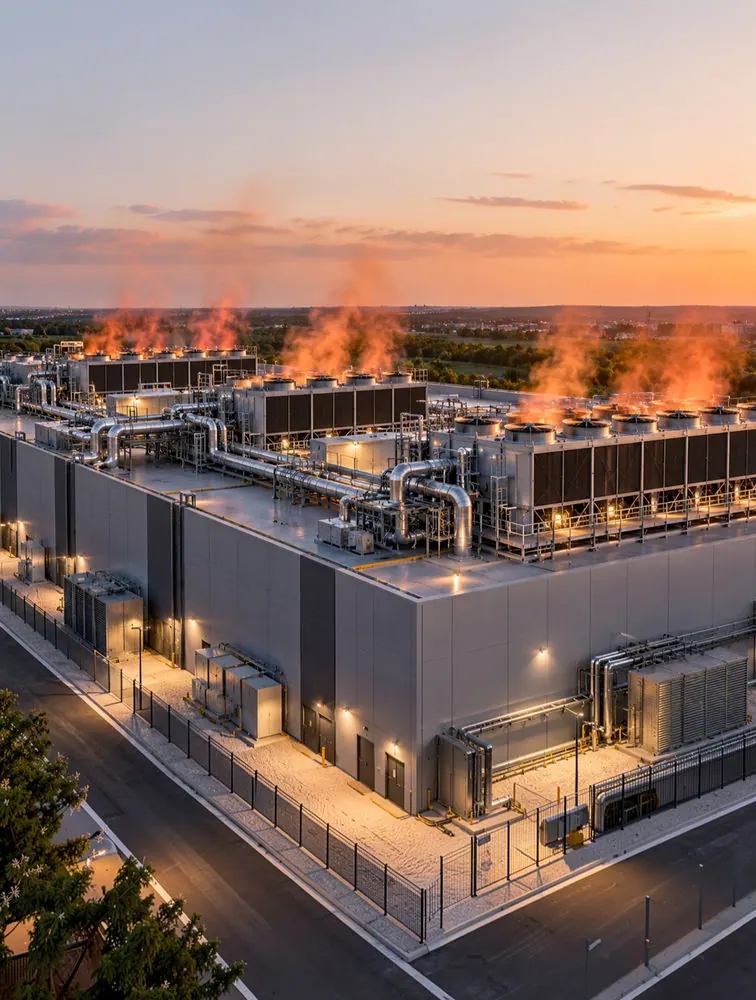
Data-centre cooling towers venting heat at dusk

Data-centre heat rejection

Cold-chain and process cooling where compressor load and refrigerants are a constraint.

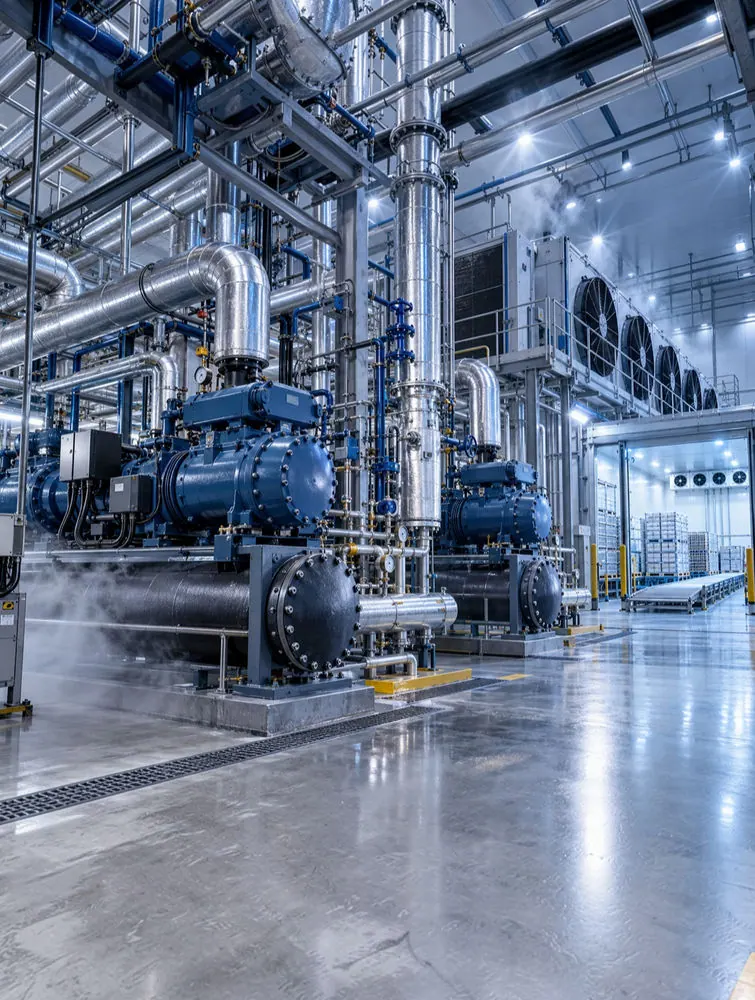
Industrial plant interior with large pipework and compressors

Off-grid & unstable-grid cooling

Cold-chain and process cooling where compressor load and refrigerants are a constraint.
Modern commercial building with rooftop HVAC units and a glass atrium

Commercial HVAC

Building cooling that leans on thermal separation rather than conventional compression.

Aim and current status

Active R&D, prototyping and performance characterisation.

To characterise the shaft-power performance of INIJEVID, identify the geometric and operating parameters that govern it, and generate the evidence needed to integrate it into the wider TOVENVOR cooling and energy-recovery architecture.

  • Prototypes built and characterised at 40, 60 and 80 mm scales
  • Instrumented test rigs producing repeatable, uncertainty-bounded data
  • Metal production rotors and standards alignment in the next phase

Have a problem like this one?

Start with a fixed-scope discovery sprint. You own the technical plan outright, whether or not we build the next stage together.